
Fees & Transfers
Binance P2P: reading an ad and confirming payment before release
Before opening a Binance P2P order, read the ad’s price, limits, payment method and deadline. Buyers should not cancel after paying, and sellers should check their own bank app before releasing crypto.
On Binance P2P, you trade crypto with another user and pay fiat through a bank or payment service. If you buy USDT, you pay and wait for the seller to release it. If you sell USDT, you must verify receipt of the payment before releasing your crypto. The two roles have different responsibilities.
The ad screenshots below are historical examples, not live quotes or merchant recommendations. Recheck filters and fees before opening an order.
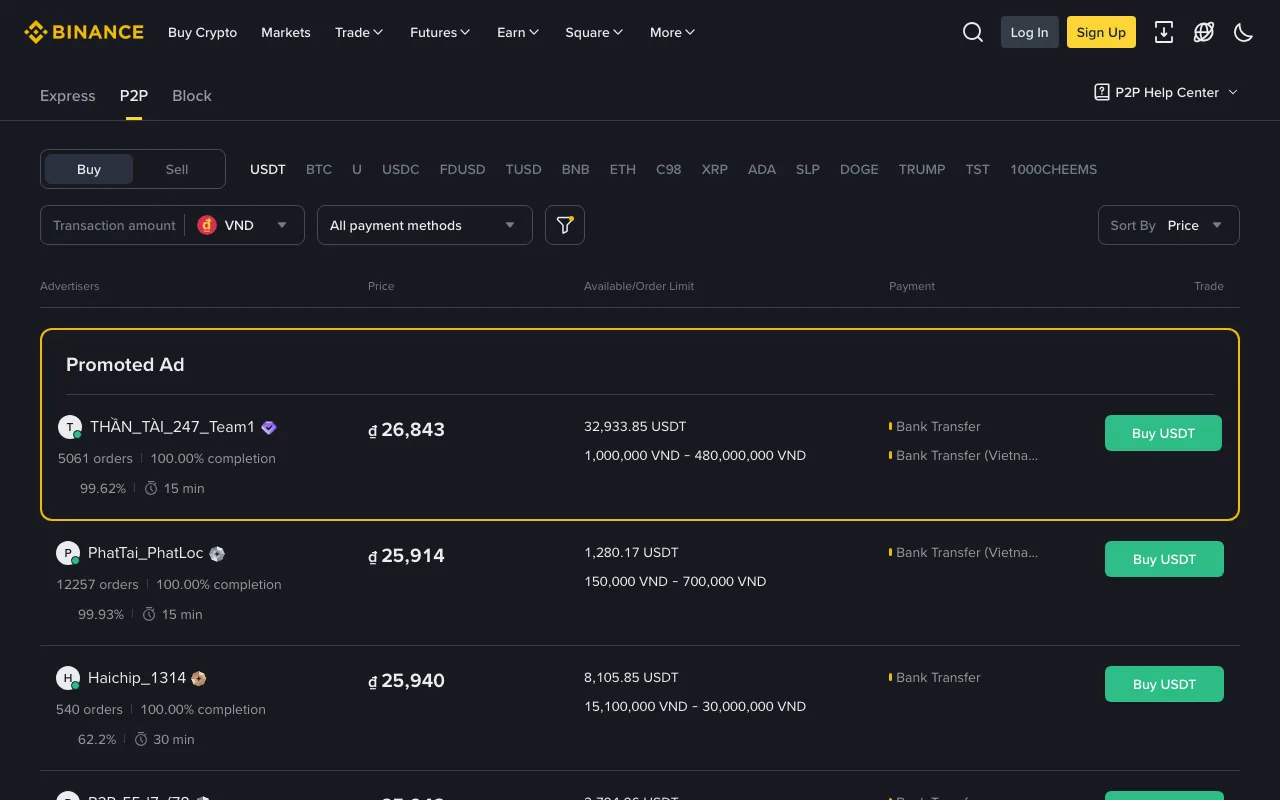
Image: the USDT/VND buy side on 22 August 2026. Read one row at a time; its fields are explained below.
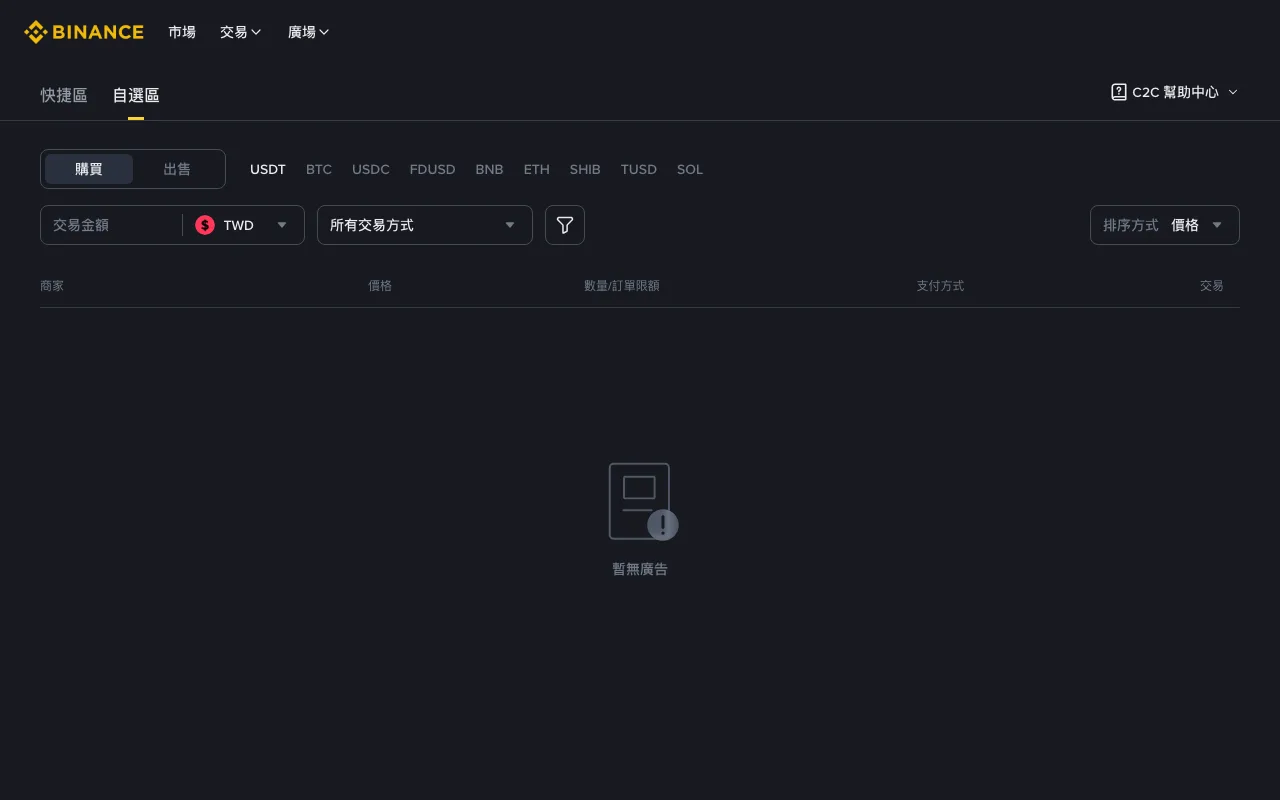
Image: P2P Express on 4 September 2026 with the fiat filter set to TWD. Where the ad list would be, the page says there are no ads.
What escrow covers and what it doesn't
The counterparty is another user. Fiat moves through the bank, wallet or other payment method specified in the order.
Crypto is held under the platform’s escrow and dispute rules. Support may release it when the applicable appeal conditions are met, so a seller must respond to an appeal and provide requested evidence. Escrow does not prevent:
- paying an account whose holder name does not match the counterparty’s verified name shown in the order;
- being persuaded to use a payment method not listed in the ad;
- a trade that local law does not permit in the first place;
- a price spread that costs more than a “zero P2P fee” label suggests.
Binance’s P2P policy tells users to follow KYC, AML and local law, and leaves tax reporting with the user. See the P2P user policy.
Five fields on one ad
On the VND buy book that day, a single row showed:
- Price in dong per USDT. Neighbouring ads quoted different prices.
- Inventory and min/max order. Your amount must fit both the available inventory and the order’s permitted range.
- Payment method. That book listed Bank Transfer and Bank Transfer (Vietnam). Select a method you can use, and verify its requirements in the current order.
- Completion rate and order count. Read them together: a high percentage does not necessarily represent a large sample, and neither guarantees the next order.
- Timer. Read the order’s actual payment deadline. If fiat has already left your bank and the order cancels, you are in a dispute, not in a “no trade”.
The cheapest row can still be the wrong fit: a method you cannot use, a limit you cannot meet, or a timer shorter than your bank’s posting delay.
Read Buy and Sell from your own side
If you want to acquire USDT using fiat, you are the buyer even though the person advertising is selling. If you already hold USDT and want fiat back, you are the seller. Before opening an order, say the exchange to yourself in that direction: “I send this amount of fiat and receive this amount of crypto,” or the reverse.
Then check the ad for your actual amount. A headline price can look excellent while the minimum order is above your budget. A supported bank name only helps if your account can make the required payment within the order's deadline. Read the advertiser's terms before committing, including any requirements you cannot meet. Do not open an order just to reserve a price while working out whether you can pay.
The VND and TWD images only illustrate fields and filters. The absence of ads in a historical screenshot says nothing certain about what your eligible account can see today.
Mistakes escrow will not undo
The first is releasing on a screenshot. A picture of a transfer does not show that the money has reached your account, so check your own bank app before releasing the crypto from escrow.
The second is moving the deal off-platform. The ad says bank transfer; the chat says “use this personal wallet”. That is outside the policy. Keep chat, receipts and appeals inside the order.
Availability in your country
Availability depends on local law, account eligibility and the platform restrictions in force. An ad being visible says nothing about whether you may legally use the service. This article explains the order flow only; it does not cover bypassing restrictions or working out an individual tax obligation.
Compare the final amount you end up with
Do not assume every P2P trade has zero fees. Charges vary with market, role and applicable conditions, so inspect the current order. Compare how much USDT the same fiat budget buys, or how much fiat selling the same amount of USDT delivers. Include bank and payment-service charges.
Compare two ads with the same budget
Consider a fictional local currency called LCU. You have 1,020 LCU available, including payment charges. Ad A quotes 10 LCU per USDT, but your payment provider charges 20 LCU. That leaves 1,000 LCU for the order, buying 100 USDT. Ad B quotes 10.10 LCU per USDT with no separate payment charge; the same total budget buys about 100.99 USDT.
The higher advertised unit price wins this narrow cost comparison, which says nothing about whether Ad B is a safer counterparty or whether its payment method suits you. These are invented numbers to show why a fixed payment charge matters, especially on smaller orders. If a platform fee applies, include that too.
For a sale, turn the calculation around: compare the fiat you will actually retain after any applicable charges for the same crypto amount. Do not compare a buy quote in one ad with a sell quote in another. They describe opposite transactions, so the gap between them is no profit you can count on.
If you have paid, or a payer's name does not match
A buyer should mark an order paid only after actually sending the payment. Once you have paid, explain any problem inside the existing order with the transfer reference and time, and keep the order and bank records. If the seller asks you to cancel or to send the money again, do neither; contact official support from that order. If the order has already canceled, keep its order number and use official support. Starting a new order does not automatically attach the old payment to it.
A seller should inspect the actual credit, amount and payer name in their own banking or payment app. Screenshots, text messages and emails from the buyer don't count. If the name does not match, funds are pending or there is a concern about reversal, do not release. Do not refund to a different account supplied in a private message; use the order's appeal process.
Escrow holds the crypto side only; fiat funds can still be disputed or frozen later.
When payment and the order status disagree
A bank showing “pending” is different from the seller confirming receipt. Equally, an order displaying “paid” only means the buyer has updated the status; your bank record shows whether you have been credited. Keep the bank record and the P2P order open separately so you do not substitute one for the other.
If you are the seller, respond promptly to an appeal and state exactly what your payment account shows. Staying silent does not stop support from releasing the crypto if the appeal conditions are met. The P2P appeal rules describe different handling for canceled orders, mismatched payments and disputed receipt. An appeal may or may not end in a refund, and the relevant conditions must be checked for your order and market.
When you write in the appeal, stick to the amount, order number, transfer reference and whether the money is pending or received, and hand over evidence only where the order or verified support asks for it.
An advertiser asking you to use a different recipient, split the payment unexpectedly or describe its purpose dishonestly is a reason to pause. Do not misrepresent a payment to your bank or ignore its restrictions. If the advertised method cannot complete the order on acceptable terms, use the platform's support process and don't agree to a side arrangement.
nelunor does not vet advertisers or handle P2P disputes, and crypto prices can fall. If you are comparing P2P with a direct transfer, our deposit and withdrawal article separates the costs and the parties responsible for each step.